The last village that we visited on our field trip was Thulogaun in the Rasuwa District. Thuolgaun is on a steep hillside overlooking the Trishuli River valley. As the raven flies, Thulogaun is only 3-1/2 miles from Kaule, but because of the mountains and the roads to each village it's a 5-6 hour drive from one village to the other, though perhaps the trip would have been shorter if we hadn't gotten lost on the way. It was on the road to Thulogaun that we missed the turnout and were halfway to China before we realized it. Still, we were treated to some nice scenery on the valley floor as we searched for the road...
Once we found the road, survived the harrowing trip up the hill, and eventually found the village, we were greeted by the Build Change field team with beers, home cooked food, and an Internet connection.
The next morning provided some very nice views of the valley below and the area around us.
That's the upside of being in a village at the top of a steep mountain. There are some disadvantages too, such as the lack of modern indoor plumbing.
 |
| Yes, it's a squat toilet and a cold shower... |
Thulogaun suffered a lot of damage in the earthquake, more so than in Kaule. There were a lot of houses with steel sheets for walls and roofs. I asked if these sheets were there before the earthquake or came after, and was told that all of the sheets were installed after the earthquake as temporary walls and roofs. Temporary being a relative term...
It's hard to imagine there used to be much larger homes here.
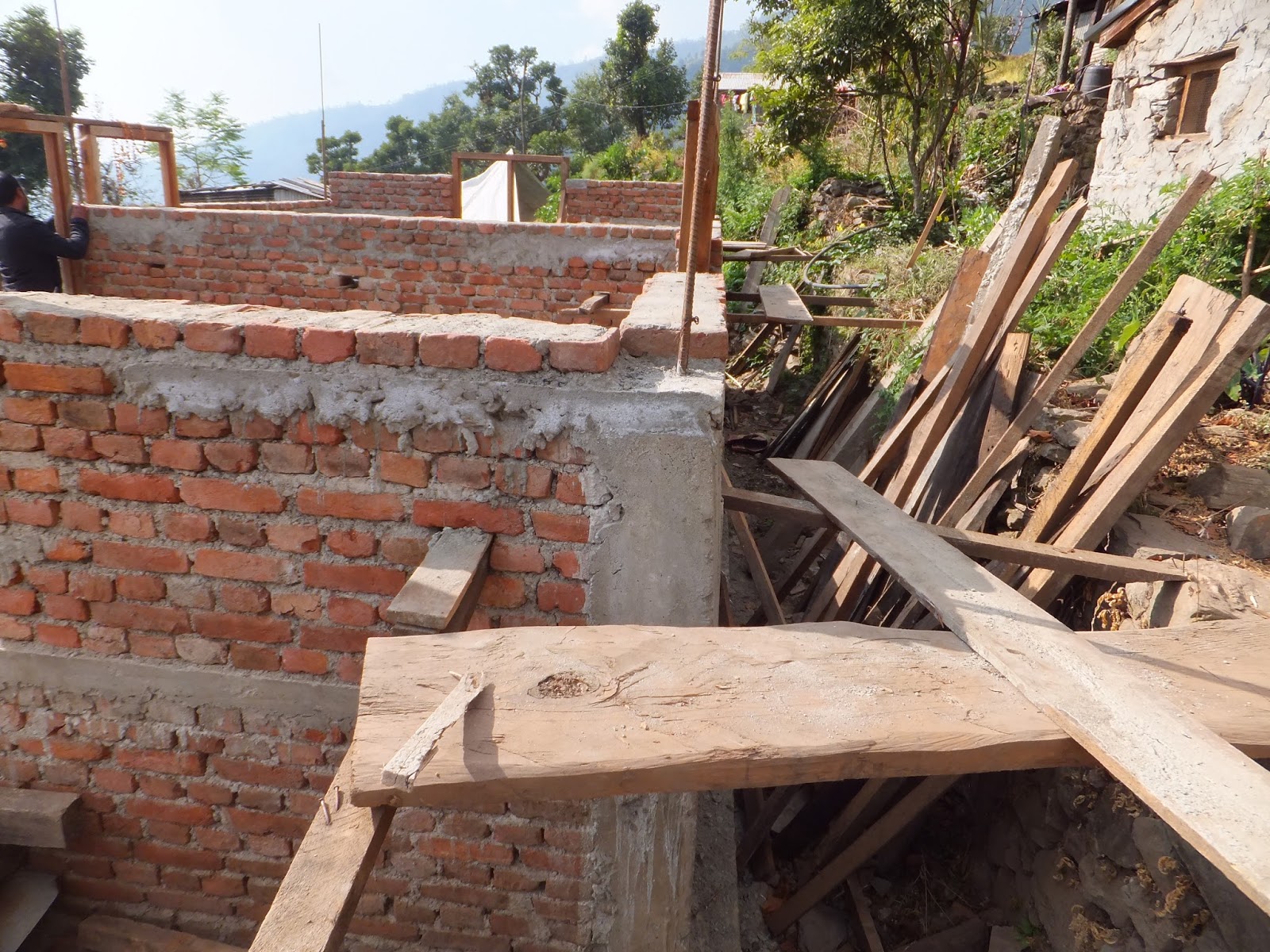
Still, there was at least some reconstruction going on, with more being planned.
There was also a local business there that specialized in making paper from locally sourced wood. The business received an award from the government. One of the products that they produce there is paper picture frames, which may be of interest to a couple of you out there ;)
Before we headed back to Kathmandu we made a brief excursion to the nearby village of Dandagaun. This village too is only starting to rebuild from the earthquake. It too had wonderful views and welcoming people.
 |
| There were a lot of large, random boulders all over the hillside |
 |
| 2 things I wondered here: The sign is in English? They have home delivery? |
We said farewell to the Build Change team and headed off for the long, bumpy drive back to Kathmandu. It was a good trip in that we got to meet some of the local office staff and see and hear about what is actually being built out there, not something one can get while sitting in an office in Kathmandu. And I only had to use the squat toilet once...